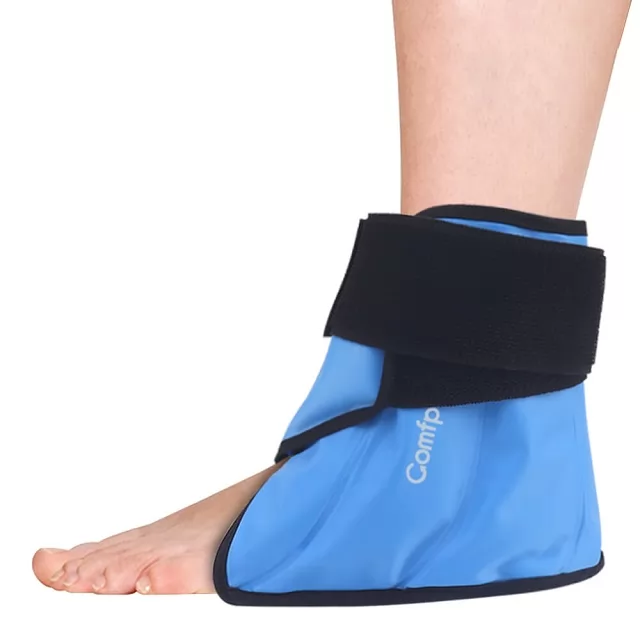
COMFPACK
Ankle hot and cold compress pack
Sample product to illustrate reporting structure
- US$32.90Sample selling price
- 4.6Sample Rating
- 3,420Number of sample reviews
Enter the ASIN and first check the public product information and competitive product paths. After providing product opportunity detector data, add niche demand, search terms, competition and return signals.
Sample product to illustrate reporting structure
Test a recovery bundle first rather than copying the Amazon product page.
 Test a purchase scenario for 90 days first
Each answer corresponds to a next step.
The public page first looks at prices, ratings, reviews, and variations; the background data then supplements search and purchase behaviors.
Determine whether the package, content, service or procurement path can be clearly justified.
Separate cost, margin, supply, certification, and channel assumptions to take the guesswork out of filling in the gaps.
Identify a buying scenario, a page, and a set of observables.
The further to the upper right the position is, the more worthwhile it is to do a small-scale test first.
Click on the applicable situation to see if it deserves further analysis.
From public information to test plans, every step can be verified.
Collate prices, ratings, reviews, rankings, and variations, and don’t write public leads into sales conclusions.
If you can provide product opportunity detector data, then analyze niche searches, purchases, reviews, returns and saturation.
Convert the conclusion into a direction of differentiation, a page, and a set of validation metrics.
Which leads are visible to anyone and which require Seller Central data are clearly marked in the report.
Product business opportunity detectors can provide niche demand and competition signals; whether an Shopify store is worth building should also be combined with brand capabilities and verifiable differences.
I don’t guess the profit, I just tell you which direction to test first.
Brand, product, e-commerce and development teams will see the same conclusions and next steps.
Determine whether this product is worthy of being an Shopify store.
Decide which product combinations and portals to test first.
Determine target customers, usage scenarios, and price range.
Break down recommendations into pages, data, and operational tasks.
Enter the ASIN and see the sample results before deciding whether to commit to the full solution.
Enter ASINWe do not predict profit or present assumptions as conclusions.
A checkable example is currently built into the local version. Before the official data interface is connected, other ASINs will clearly indicate that there is no data.
No. The report determines the direction worthy of verification and lists the data that needs to be confirmed in the next step.
This data comes from Product Opportunity Explorer under Growth in Amazon Seller Central and must be supplied by the seller. A public ASIN preview is never presented as live seller data.
The free report explains whether an off-Amazon test is worth exploring. The full plan also validates product mix, market, content, technology and execution priorities.
We will check product, demand and competing product information and will not fill in data that cannot be confirmed.
 English
  简体中文
简体中文  日本語
日本語  香港中文
香港中文  Deutsch
  繁體中文
繁體中文